It is a common adage that we must learn from the past or be doomed to repeat it. But to be inspired by vintage design is to actively seek to repeat and reflect. History has shown us countless design styles reflecting the aesthetic of the era. This is evident in studying architecture, interior design, fashion, graphic design, and typography. From Art Deco of the 1920s to Art Nouveau of the early 1900s, from the Retro style of the 1950s to the Groovy style of the 1970s; art and design have had a stamp on every decade.
To be a good designer, one must know what has come before them. While it is beneficial to peruse websites such as Pinterest, Behance, and Dribbble for inspiration, it is just as helpful to explore art museums, thrift stores, and archives. In an increasingly digital landscape, it is imperative that we keep and nourish our analog roots. Researching the aesthetic as well as the products that came out of each decade can give a designer further foundation and depth in discovering and refining their own style.
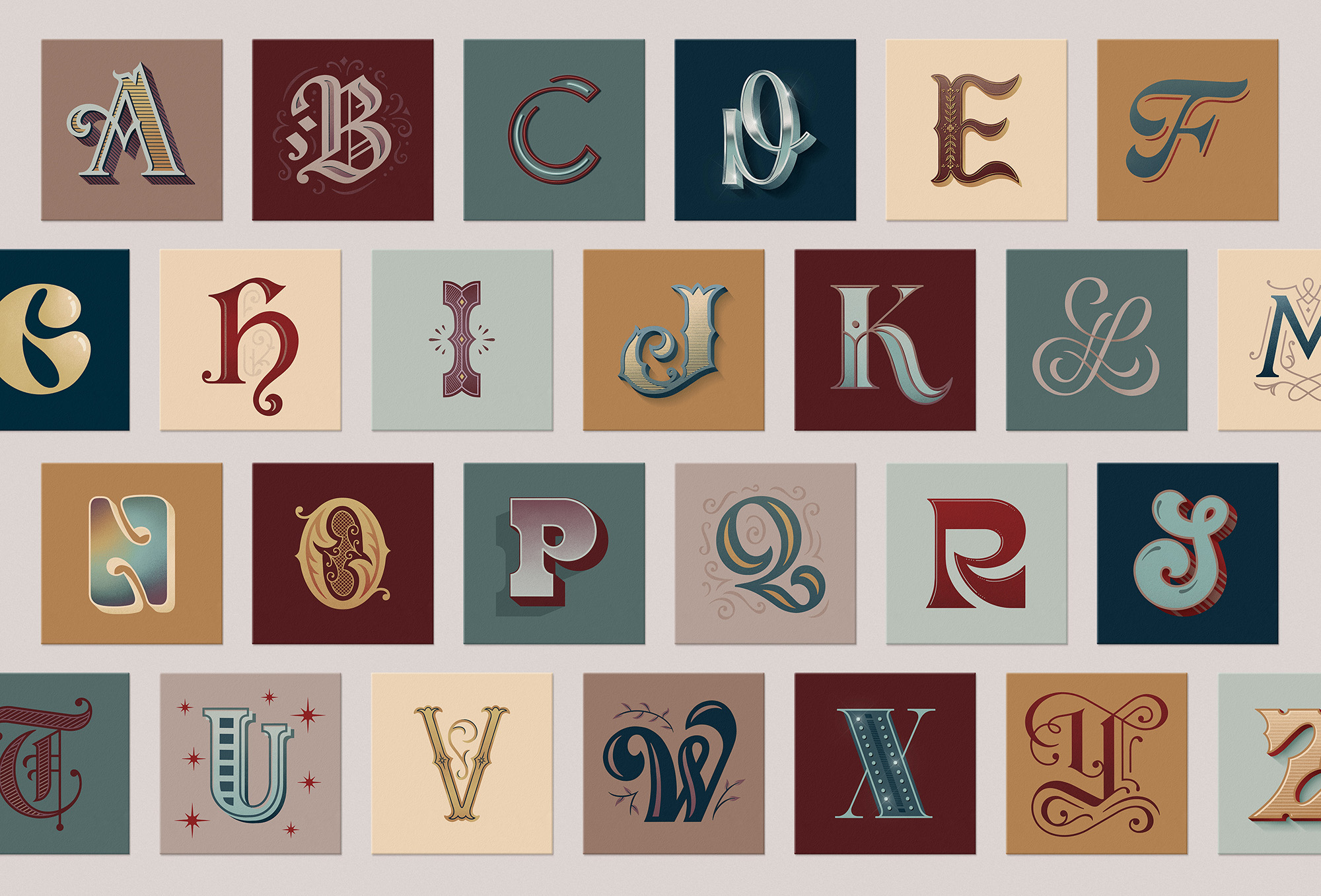
This became apparent to me in researching my second 36 Days of Type project. I strove to create a series of letters spanning multiple eras of design under the overarching vintage and retro umbrella. My goal was to show a string of many different styles while still tying them all together. I wanted them to be distinct and yet connected. Each letter is a snapshot in history.
It is true that learning from the past can inform current decisions. It can also inform on your own personal identity and personal style. Knowing what came before you in poster design, package design, typographic design, etc. is incredibly valuable. To see the work that designers put in to define an entire decade, an entire generation is humbling. And to see what stood the test of time and became impactful is very telling.